The National Park Reservations blog is your source for all the latest information regarding all of America's favorite National Parks.

Calendar

June 2007
M T W T F S S
« May   Jul »
 123
45678910
11121314151617
18192021222324
252627282930  

June 29, 2007

Sites Beyond Yosemite Valley

Filed under: Uncategorized — National Park Reservations @ 8:08 pm

 atm.jpg

While Yosemite Valley can be quite crowded, especially in the high season there are many adventures to be had beyond its boarders.  Consider hiking to Sentinel Dome, with its gorgeous 360 degree panoramic view, or Taft Point that takes you past rock fissures to an overhanging rock looking own thousands of feet on Yosemite Valley.  Other attractions include Tioga Road where you can hike up to a high country lake.  

You will also find trails that depart from Tuolumne Meadows area the offer amazing views of peaks and meadows.  The top of Lambert Dome shows off unparalleled views of Tuolumne.  And for an easy, enjoyable walk try out the Meadows Loop in Wawona.  This is a picturesque walk theta skirts the edges of Wawona Meadow.  For a more strenuous hike go to Chilnualna Falls that leads to a view of one of the tallest cascades outside Yosemite Valley. 

• • •

June 28, 2007

Yosemite Valley Fun

Filed under: Uncategorized — National Park Reservations @ 6:58 pm

yosemite-chapel.jpg

Yosemite Valley is the centerpiece of Yosemite National Park. The Valley is the point of entry into the park for the majority of visitors, and a bustling hub of activity.  Here you will find an array of visitor facilities clustered in the middle. There are both hiking trail loops that stay within the valley and trailheads that lead to higher elevations — all of which afford glimpses of the parks many scenic wonders.
Yosemite Valley is a great place to start your Yosemite trip.  There are many points of interest right in the Valley that will interest and entertain you and everyone in your group. Whether you’re interested in finding out more about the park at the Valley Visitor Center or Yosemite Museum, looking for nature information at the Wilderness Center or Nature Center at Happy Isles or are interested in some history at the Yosemite Cemetery you will be sure to find everything in the valley.

If you’re thinking of finding lodging in the Valley your will be pleasantly surprised by the wonderful options found here. The historic Ahwahnee Hotel is located here.  The Ahwahnee is famous for its great granite façade, striking beamed ceilings, massive stone hearths, richly-colored Native American artwork and finely appointed rooms. The Wawona Hotel will take you back to a bygone era. Located four miles from the Park’s south entrance the Wawona Hotel’s whitewashed buildings feature rooms without telephones and televisions, so nothing will distract you from the natural surroundings.
 

For a more down to earth experience check out the Yosemite Lodge at the Falls.  As the closest property to Yosemite Falls Yosemite Lodge at the Falls is an idyllic spot for families, group retreats and visitors seeking the comforts of a hotel after an exciting day exploring the wilderness. If you are traveling with a larger group or want a more affordable choice for your trip consider a stay Curry Village. Curry Village offers standard motel rooms, cabins and canvas tents for a unique lodging experience right in the middle of the great outdoors. A grocery store and outdoor shop are conveniently located onsite.

There are several other lodging options.  Check out the Yosemite Lodging site at National Park Reservations for more Yosemite Valley lodging information.

• • •

June 27, 2007

Glacier NP Hidden Lake Hike

Filed under: Uncategorized — National Park Reservations @ 4:17 pm

 a-lake.jpg

Astrid Sieger


Last summer we had a friend who was only living in Montana for about 6 months while working an apprenticship at a local pottery.  About 3 weeks before he was to return home to Pennsylvania we decided to take him to Glacier National Park for a hike to Hidden Lake.  Loading up with plenty of water and good hiking shoes we set out early one morning for this beautiful experience.

To get to the head of the trail we drove up Going-To-The-Sun Road to the top at Logan’s Pass.  There is a great big visitor’s center and parking lot at Logan’s Pass so when we found a parking spot we got out filled backpacks with high-energy snacks and rubbed on sun block.  The first part of the trail was paved and easy walking; the overlook of the lake is easily reached by a relatively flat hike of 1.5 miles. From here there are amazing vistas that show off the grandeur of this pristine park.

Farther down the trail became a little more difficult. To reach the lakeshore requires an additional hike of 1.5 miles down a relatively moderate grade; I wouldn’t take my small niece and nephew past this point but it’s an incredible trip that I highly recommend. We encountered mountain goats grazing along the sloping sides of the trail; the occasional breeze made this a most enjoyable hike. 

Hidden Lake is not a huge lake and is relatively protected from the high winds by its location deep down in a bowl.  We went down to the edge of the lake, taking off our shoes for an instant cool down as we stood in the cold water munching on Power Bars, and dried fruit.  Looking out over the lake you will see nothing but sky and vegetation and like the rest of Glacier Park the air is the clearest you will ever breathe.  Fishing is a popular activity here. 

When visiting Glacier National Park be sure to make time for a Hidden Lake hike, it’s an unforgettable experience! 

• • •

June 26, 2007

Reminder

Filed under: Uncategorized — National Park Reservations @ 3:39 pm

 a-el.jpg


Just as a reminder I am posting the following acts that are illegal in most parks and that you should look out for and report if you see this happening.


Feeding wildlife 

Hunting animals 
Collecting park resources 
Picking up archeological items, such as arrowheads 
Using metal detectors to locate and collect historic objects 
Driving vehicles into sensitive meadows 
Camping outside of designated campgrounds 

Possessing weaponsNational parks contain many plants, wildlife and historically important areas that the park was created to protect.  Please help preserve these special places for future generations by writing down any descriptions or vehicle license place number of offenders and call 9-1-1 or the park dispatch office.

• • •

June 25, 2007

National Park Recreation

Filed under: Uncategorized — National Park Reservations @ 4:12 pm

 a-golf.jpg

When visiting any national park it is a natural to get out and enjoy the great outdoors!  There are many options for recreation at national parks across the country.  Today I’m going to focus on Yosemite as my example however you will find many recreation options for other national parks on the activities pages of National Park Reservations.

Backpacking: Did you know that 95% of Yosmite is designated wilderness? Backpacking into the high country is a wonderful way way to experience Yosemite. 

Bicycles: Bicycle rentals are available to explore Yosemite Valley.  There are over 12 miles of paved bike paths that take you along a beautiful scenery of trees, shrubs and wildlife.

Golf: Wawona’s Golf Course was the first regulation course in the Sierra Nevada.  Today as in 1918 it provides golfers challenging and rewarding rounds.  This golf course is next to the historic Wawona Hotel and offers amazing views all around. 

River Rafting: River rafting on the Merced River provides exhilarating views of Yosmeite Valley.  Rental rafts, life jackets and paddles are available at the Curry Village Recreation Center. 

Other activities include self-guided tours, swimming, guided trail rides and winter activities. To find out more check out the National Park Reservations activities page for the park you are visiting.
• • •

June 23, 2007

Who Is John Muir?

Filed under: Uncategorized — National Park Reservations @ 7:14 pm

a-muir.gif

When a young John Muir arrived in San Francisco from Scotland in 1868 he supposedly asked for directions to “anywhere that’s wild.”   Locals pointed him toward the Sierra Nevada, and it was there that he fell in love with what today is Yosemite National Park.  Legend is that he shouted with joy when he first saw Yosemite.  Over the next few years he worked as several jobs including mill worker, shepherd and hotel clerk in order to live in this vast wilderness.  

John Muir kept a daily journal where today we can find much information about his love of the Yosemite area.  One of his famous quotes detailing the joy he found here and that he was so anxious to preserve and share reads, “Climb the mountains and get their good tidings.  Nature’s peace will flow into you as sunshine flows into trees.  The winds will blow their own freshness into you, and the storms their energy, while cares will drop off like autumn leaves.” Because of his feelings for this area Muir was saddened by the invasion of cattlemen, and land speculators to the area. 

One summer he traveled throughout the Sierra Nevada to study the threatened territory.  As he thrilled at the sight of alpine meadows, wildlife and vegetation of the area he wondered if they could survive into the next century. Thus began his quest to do all he could to preserve this wilderness.  His arguments for preservation included the value of this area to the water-dependent San Joaquin Valley agricultural industry.  Over the next decade Muir worked tirelessly to keep Yosemite intact and in its original state.  

Because of the dedication of people like John Muir U.S. Presidents, congress members and others became aware of areas like Yosemite and traveled to these wilderness places to see the beauty and understand the importance of preserving it.  In 1872 Yellowstone National Park became the first national park in the United States.  Yosemite National Park was officially established in 1906.  

When you visit Yosemite keep in mind the work and dedication of those that went before. Show respect for the nature that John Muir wrote so eloquently about by following the regulations set forth by the National Park Service and leave the park better than you found it by doing your part in maintaining the nature that Yosemite represents. 


• • •

June 21, 2007

Altitude Effects

Filed under: Uncategorized — National Park Reservations @ 8:30 pm

 az.jpg

It seems like one thing you don’t have to even consider when going on a national park vacation.  But the effects of altitude need to be taken seriously, particularly if you plan on climbing some of the famous trails in parks such as Yosemite, Grand Teton and Olympic.

Healthy adults, even athletes and professional climbers are susceptible to altitude sickness.  It can develop at altitiudes as low at 8,000 feet. You should be aware that older folks and those with heart or lung disease are more prone to altitude sickness.  Regardless of what age you are or your health status you should be aware of the signs associated with altitude sickness. 

Symptoms indlude headache, nausea, insomnia, irritablitly, shortness of breathgeneral malaise and fatigue.  The good news is the altitude sick can be avoided by slowly acclimating yourself to highter elevations, over the span of two to three days by greadually gaining elevation until you reach 10,000 feet.  Avoiding alcohol, sugar and high fat meals is also suggested.

Okay, now what if you are gaining elevation and suddenly develope any of the symptoms of altitude sickness?  Descend to a lower eleveation immediatly.  Seek medical help.  For example Yosemite operates a clinic in Yosemite Valley.  Yosemite Medical Clinic’s staff is experienced with diagnosing and treating altitude sickness. It is always good to know where the nearest clinic is when visiting a park and embarking on hiking, biking, rafting or any of the many recreational activities available in our national parks.

• • •

June 20, 2007

Bear Saftey

Filed under: Uncategorized — National Park Reservations @ 3:57 pm

 paw.bmp

Last week there was a tragedy in a Utah canyon campground.  An 11-year old boy was dragged from his family’s tent in the middle of the night.  His remains were found the next morning.  While this is a sad case of bears gone wild, it is not a usual one.  There are many things you can do to prevent bear attacks when you are out hiking or camping in the wilderness.

I think the first thing to consider is your attitude about wildlife in general and bears specifically.  Bears are wild animals and though they look cute they will hurt you.  Bears weigh between 200-350 pounds and can be as large as 500 pounds.  They can run faster than humans and have a ready weapon, their razor sharp claws.  Attempting to pet a bear or hand feed a bear will land you in the hospital, at best. 

Black bears have a powerful sense of smell, are highly intelligent and are excellent learners.  They are opportunistic feeders and will seek out food wherever it can easily be found.  You can best protect yourself and the bears whose home you are visiting by storing your food in bearproof food lockers or canisters and disposing of your garbage properly.  Storing your food in a cooler is not an option in the wild. Bears can smell the food and will come after it.  Unless you want your car torn apart you should also make sure that there is no food left in your vehicle.

Tips for helping keep bears and people safe:

1-Food is considered any item with a scent, including canned goods, bottles, drinks, soap, cosmetics, toiletries, trash, ice chests (even when empty) and unwashed utensils. 

2-Remove food from your car and store in a food locker when you will be away from your vehicle after dark.

3-When camping, hiking or picnicking always keep food within arms reach and never leave unattended.

4-Always stay with your food and treat your food locker like a refrigerator-keep it closed unless you’re activly getting food in or out.

5-If you see a bear in a developed area, such as a campground or parking lot, make as much noise as possible by yelling or banging pots together to scare it away.  If you see a bear in the wild keep at least 50 yards away to allow the bear to continue in its natural behavior.

6-Drive the speed limit.  The most common human-related cause of bear deaths is being hit by a car.

7-Report all bear sightings to the ranger station or visitors center where they can notify the proper authorities. 

Following these tips will ensure the safety of everyone involved. 

• • •

June 19, 2007

Grand Circle

Filed under: Uncategorized — National Park Reservations @ 3:53 pm

 a-cl.jpg

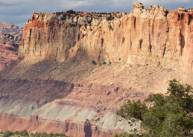
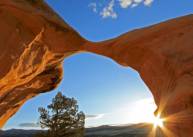
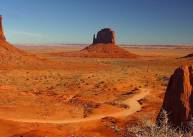
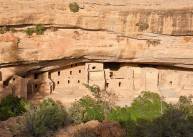
Want a fun summer trip? Check out the Grand Circle! The Grand Cirle starts at Zion National Park in southern Utah and ends here.  It encompasses Zion, Bryce Canyon National Park, Capital Reef, Arches National Park, The Canyonlands, Mesa Verde National Park and the Grand Canyon. 

A short stop in each location is possible in one week but it is recommend that you plan at least two weeks so you will have the chance to enjoy and learn about each unique destination. The American Southwest is famous for incredible scenery, red rock pinnacles and formations, brilliant sunsets, and deep canyons. It is uncommon land, for an uncommon experience, and it’s all found in the Grand Circle.

To make lodging resevations in any of the available accomodations at the various parks inside the Grand Circle call National Parks Reservations today at 1-866-875-8456.  


• • •

June 18, 2007

Hiking Safety

Filed under: Uncategorized — National Park Reservations @ 3:51 pm

 a-hike.jpg

Astrid Sieger 

The headline reads, “Missing visitor found alive in Glacier National Park.” Thank goodness she was found alive! When you read an article like this you wonder what tragedy could have occured to make this woman missing.  The facts of the matter were far from sinister.  She simply became seperated from her hiking companion and wandered Glacier Park for a day until she was found.

It seems a little silly.  You’re with another person and you’d think that it was a “safe” situation.  And it is.  But every now and then things still happen that you weren’t counting on.  Whether you get seperated from your group, step into a rut and turn your ankle or encounter a bear it’s good to be prepared for such unlikely occurances.
In the interest of keeping our clients and visitors to the national parks well informed this list of safety tips should give you solid footing when embarking on your hiking adventure.

  • Hike with a friend or family member.  The companionship in the great outdoors is fun and you can encourage one another to meet your fitness goals.
  • Take plenty of drinking water.  Leave stream, river and lake water for the park wildlife.  Although it looks clean and refreshing, mountain stream water can make you ill.
  • Let someone back at camp or at home know where you are going and when you plan on returning.  Take a mobile phone for emergencies only or to let them know you have returned safely.
  • Don’t walk off-trail.  Cutting across switchbacks erodes the hillside and eventually destroys the trail.  Plus, walking off-trail increases your chance of suffering an injury or getting lost
  • Wildlife lives in all of our national parks.  Although rare, black bears, mountain lions, and rattlesnakes may be seen. Whenever you encounter wildlife on the trail, keep your distance back away slowly, and do not run.  If you are carrying ANY food leave it for bear and back away slowly.  The bear wants the food more than he wants you.

• • •
Next Page »