The National Park Reservations blog is your source for all the latest information regarding all of America's favorite National Parks.

Calendar

October 2006
M T W T F S S
    Nov »
 1
2345678
9101112131415
16171819202122
23242526272829
3031  

October 16, 2006

Yellowstone will reduce use of howitzer to trigger avalanches

Filed under: Uncategorized — National Park Reservations @ 4:06 pm

The Associated Press

Officials plan to trigger controlled avalanches at Sylvan Pass in Yellowstone National Park this winter by dropping explosives from a helicopter while cutting back on the use of an aging 105 mm howitzer.

Park officials have been trying to reduce the use of the howitzer for years because they say it’s unsafe for employees and often shoots shells that do not immediately explode, but could detonate later.

‘If this was an easy problem to be solved, it would’ve been solved a decade ago,’ said Steve Swanke, acting health and safety manager at Yellowstone. ‘It’s far from that.’

The park has contracted with a Bozeman company for the past two years to perform helicopter missions over Sylvan Pass, on the route into the park from Yellowstone’s east entrance, to drop explosives that trigger avalanches. The missions prevent snow from building up that could later fall unexpectedly on visitors or workers.

Swanke said the helicopter will be used again this winter. He said the howitzer will be used only in limited cases, such as when bad weather or another emergency keeps the helicopter from flying avalanche missions.

‘I think we’re going to lean a little heavier on the helicopter this year than we did last year,’ Swanke said.

Park officials estimate there are as many as 300 unexploded howitzer shells in the hills around Sylvan Pass from years of using the howitzer. The pass was closed for a day last spring after a construction worker found an unexploded shell on the road.

• • •

October 9, 2006

THE MOST VISITED NATIONAL PARKS

Filed under: Uncategorized — National Park Reservations @ 6:51 pm

Some see park rankings as just a numbers game

http://www.reviewjournal.com/lvrj_home/

2006/Oct-09-Mon-2006/news/10093981.html

By HENRY BREAN
REVIEW-JOURNAL

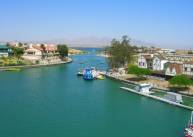
If you’ve ever waited in line on the Callville Bay launch ramp or steered a boat through traffic in Hemenway Harbor, you know that Lake Mead can be a busy place.

But just how busy might surprise you.Last year, Lake Mead National Recreation Area attracted nearly 8 million visitors, almost twice as many as the Grand Canyon and more than twice as many as Yellowstone or Yosemite.

Of the 390 sites managed by the National Park Service, only four draw more people than Lake Mead. And earlier this year, the 1.5 million-acre recreation area east of Las Vegas was poised to rise to third or fourth on the list of busiest parks, though its numbers appeared to fall off a bit in September.

The last time Lake Mead ranked as high as third was in 1995, when the park drew 10.2 million visitors, its highest total ever.

“We’re in the upper tier in terms of visitation. There’s no question about that,” said Jim Holland, park planner for Lake Mead. “We’re one of the most-visited units of the National Park Service.”

But some staff members think Lake Mead gets cheated out of an even higher rank because of the way visitation is counted at other park sites.

Lake Mead spokeswoman Roxanne Dey said some of the parks near the top of the list are located along commuter routes and report numbers unavoidably inflated by traffic unrelated to visitation.

Of the four sites with higher visitation totals than Lake Mead, two — Golden Gate National Recreation Area in San Francisco and Gateway National Recreation Area in New York City and New Jersey — are bisected by major highways.

The site at the top of the list actually is a highway. Blue Ridge Parkway is a 470-mile scenic road that meanders through two states from Shenandoah National Park in Virginia to Great Smoky Mountains National Park on the Tennessee-North Carolina border.

Last year, the parkway reported nearly 18 million recreational visits.

“That has been a sore spot for some (Lake Mead) park employees who feel we should be even higher up the list, if not first,” Dey said. “We don’t have our counters out on U.S. (Highway) 93. We don’t count every car that drives by the road to our visitor center.”

The park also doesn’t count the roughly 1 million people a year who visit Hoover Dam, which is surrounded by the recreation area but is managed by the Bureau of Reclamation.

“They want the bragging rights,” Holland said of some Lake Mead staffers.

Management Analyst Butch Street, who has been in charge of visitor statistics for the National Park Service for 25 years, said comments like that “sound like sour grapes to me.”

Street insists his office produces what he called “very remarkably good estimates” that account for everything from commuter traffic to the comings and goings of Park Service employees.

“We go through a tremendous amount of effort to get the right numbers,” he said.

At Florida’s Biscayne National Park, where there are no roads, that means using aircraft to count visitors in boats. At seven of the monuments the Park Service manages in Washington, D.C., that means sending rangers out on foot to count heads six times a day.

“You can’t manage an area if you don’t know what’s happening there,” Street said.

Golden Gate National Recreation Area, for example, takes in the iconic bridge and sites at either end, as well as Alcatraz Island in the San Francisco Bay. What it does not include is the busy stretch of Highway 101 that runs across the bridge.

As a result, great pains must be taken to exclude Bay Area commuters from the park’s visitor count, which topped 13.6 million people last year.

Including such traffic “would skew our numbers significantly,” said Golden Gate spokesman Rich Weideman.

Brian Feeney, spokesman for the heavily urbanized Gateway National Recreation Area, put it another way. “That would be cheating if we counted (commuters). We don’t cheat like that,” he said.

Things get a bit more complicated on the Blue Ridge Parkway, which has 94 access points but no entrance fees.

“It is very difficult to differentiate commuters from other travelers,” said Blue Ridge spokesman Phil Noblitt. “It’s impossible for us to know with any degree of certainty exactly how many people visit the parkway.”

What Blue Ridge staffers end up with instead, Noblitt said, are statistics compiled using “a lot of estimation and extrapolation” that are most useful for identifying trends in visitor volume.

Lately, Street said, the trend at National Park Service sites has been downward.

“We’ve been down seven out of the last 10 years,” he said. “I hate to argue with George Bush about the economy. There’s just not as much money out there, and let’s face it, most of our parks are destination parks.

“People are staying closer to home lately. They just don’t have the dollars.”

Lake Mead has seen its annual visitor volume drop by more than 2 million people over the past decade, despite rapid population growth in the region.

Holland said he can’t explain that, but he isn’t too worried about it. “In this case, there’s no real advantage to being number one” in visitation, he said.

The budgets for National Park Service sites are not directly tied to how many visitors they attract, though Street said being high on the list can impact staffing levels and road maintenance money.

“If you don’t think we in the Park Service don’t sit down and look at this … you’re sadly mistaken,” he said.

Holland said Lake Mead’s ranking is used mostly for political purposes. “The fact that we have high visitation is written into every one of our justifications” for budget requests, he said.

Holland said it doesn’t really matter whether the lake ranks first or fifth on the list of the nation’s most visited parks.

“If we’re providing recreational opportunities for almost 10 million people,” he said, “I feel pretty good about that.”

• • •

October 6, 2006

The woods of her childhood

Filed under: Uncategorized — National Park Reservations @ 2:29 pm
A return visit to Colorado’s Boulder Valley, where autumn is beautiful but fleeting, awakens memories of small pleasures.
http://www.latimes.com/travel/la-tr-drives1oct01,0,4409218.story?coll=la-home-travel
By Francine Orr, Times Staff Writer
October 1, 2006

“PEOPLE seeing the beauty of this valley will want to stay, and their staying will be the undoing of its beauty.”

Those were the words of Chief Niwot, whose band of Arapaho Indians inhabited Colorado’s Boulder Valley when the gold miners, soldiers and settlers began to arrive in the 19th century. Those who live here today have reinterpreted “Niwot’s Curse” into something positive: that anyone who experiences the region’s beauty is destined to return.

I grew up in Colorado in the 1970s and ’80s, and in the summers I would run around these woods and meadows, picking flowers with my aunt, throwing berries at my cousins. These are the trails where I discovered the poetry in nature and later dreamed of becoming a photographer.

I was drawn back in mid-September, just as the last petals dropped from the summer flowers and the aspen leaves began to turn. I was reminded how autumn is delicate when pressed up against the Continental Divide, easily trammeled by an early winter at this elevation.

The little town of Ward is home to about 150 people — and maybe more dogs — including radical poets, bohemian PhDs and troubled woodsmen. They’re kind people, but most decamped to 9,253 feet to be left alone. It’s not a place to linger.

I stayed down a dirt road east of Ward, at the Gold Lake Mountain Resort & Spa — and it was lovely, even though the words “spa” and “Ward” seemed odd sharing a sentence. After dark, I floated in the resort’s hot springs under a star-filled sky.

During the day, I drove north to Estes Park to seek the bugling elk, until one chased me back to my car. Another day I went to Red Rock Lake just west of Ward. Storm clouds roiled overhead, but the winds fell silent and the water was perfectly still. My feet sank into the marsh at the lake’s edge as I watched the rain arrive.

The area’s beauty is not yet undone. And Niwot’s curse? For me, it was a blessing.

• • •

October 4, 2006

Small Quake Rocks Maine; No Injuries

Filed under: Acadia, National Parks News & Updates, Uncategorized — National Park Reservations @ 8:03 pm

The Associated Press

A small earthquake sent rocks tumbling onto a road in Acadia National Park and burst water pipes, but no injuries were reported, officials said Tuesday.

The earthquake struck about 8 p.m. Monday and could be felt in Bangor and Augusta. It had a preliminary magnitude of 3.9, said John Ebel, director of the Weston Observatory at Boston College.

‘That’s a good shake to the people who felt it. It would feel like heavy truck passing by to people in Bar Harbor and 20 or 30 miles out,’ Ebel said.

Part of Acadia’s Park Loop Road was closed due to a rockslide. Some power outages also resulted, said Jeff Chamberlain, dispatcher for the Bar Harbor Police Department.

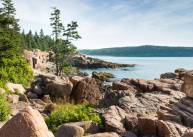
Maine has experienced a recent string of small earthquakes following a long period of seismic inactivity. People on Mount Desert Island, home to Acadia National Park, experienced a magnitude 3.5 quake on Sept. 22. Before that, a magnitude 3.8 earthquake was recorded in the northern part of the state on July 14.

‘By contrast, the 1980s were much more active,’ Ebel said, citing quakes in eastern Maine in 1984 and in western Maine four years later.

• • •

October 2, 2006

National parks’ wildlife on view in fall

Filed under: Uncategorized — National Park Reservations @ 8:30 pm

You’re up for seeing large terrestrial animals this fall but want more time to get there before park facilities close. No problem. Among the 390 parks run by the National Park Service are several renowned for fall wildlife viewing opportunities. While there are never guarantees you’ll see wildlife, these parks will give you more than a fighting chance.

If you’re partial to moose, say, or bears, or any other particular animal, you might want to consult the National Parks Conservation Association, www.npca.org/wildlife_protection/wildlife_facts. Click on any animal in the left-hand column to be taken to a page that lists the national parks in which that animal can be found. Moose, for example, are found in North Cascades National Park in Washington, Rocky Mountain National Park in Colorado and Voyageurs National Park in Minnesota, among others.

You can also look up any individual park on the National Park Service Web site (www.nps.gov) to see what wildlife it is known for.

Here are seven national parks besides Grand Teton and Yellowstone that offer excellent chances of wildlife viewing this fall, according to National Park Service biologist Gary Johnston, and some of the animals you might see:

– Badlands National Park, South Dakota: bison, bighorn sheep, elk. (605) 433-5361, www.nps.gov/badl.

– Great Smoky Mountains National Park: black bear, deer, elk. (865) 436-1200, www.nps.gov/grsm.

– Olympic National Park, Washington: black bear, elk. (360) 565-3130, www.nps.gov/olym.

– Rocky Mountain National Park, Colorado: elk, mule deer, moose, bighorn sheep, black bears, coyotes, cougars. (970) 586-1206, www.nps.gov/romo.

– Shenandoah National Park, Blue Ridge Mountains near Luray, Va.: black bear, white-tailed deer. (540) 999-3500, www.nps.gov/shen.

– Theodore Roosevelt National Park, North Dakota: bison, elk, wild horses. (701) 623-4466, www.nps.gov/thro.
– Yosemite National Park, California: mule deer, black bear. (209) 372-0200. www.nps.gov/yose.

Washington Post
Sunday, October 1, 2006
http://www.sfgate.com/cgi-bin/article.cgi?f=/c/a/2006/10/01/TRGJ8LDS1V1.DTL

• • •
Powered by WordPress |•| Wordpress Themes by priss